Guide to Solar for Commercial Buildings: Warehouses, Offices, and Retail Spaces
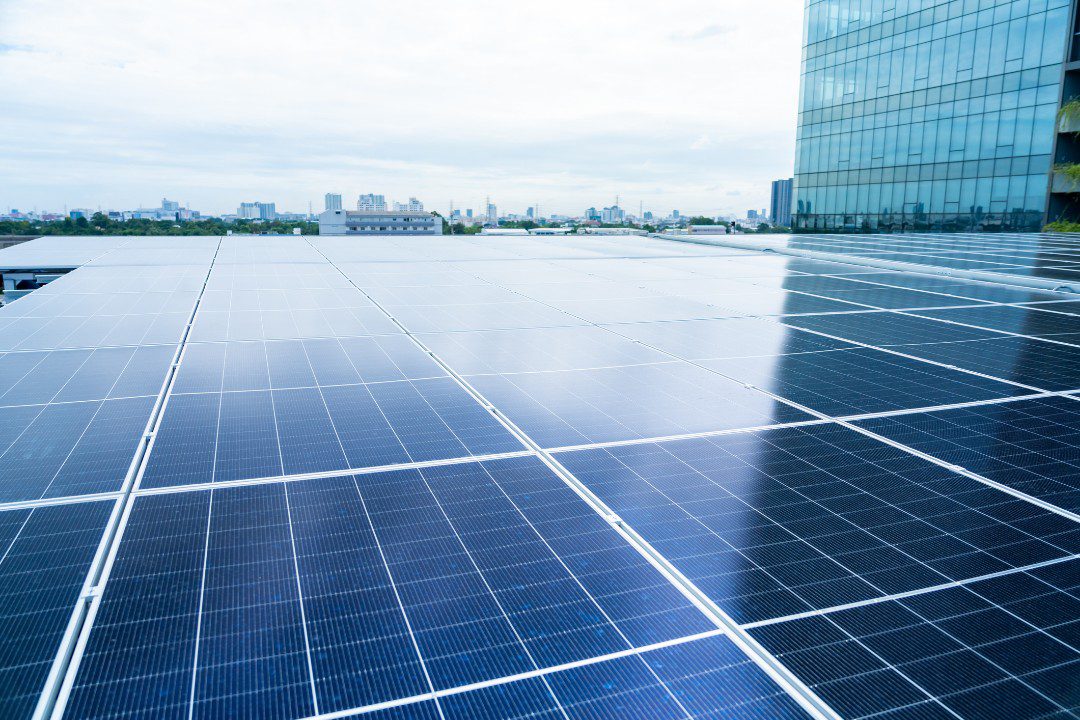
Solar is no longer just a residential upgrade. Across Southern California, businesses of every type are turning to solar to cut operating costs, act on their sustainability commitments, and gain greater energy independence. This complete guide to commercial solar walks you through everything you need to know about commercial solar installations, from how the technology works to the financial benefits available to business owners today.
Whether you own a warehouse, manage an office building, or operate a retail location, this guide to commercial solar covers what makes each property type unique, what your installation options look like, and how to approach your commercial solar investment with confidence.
Why Commercial Solar Makes Sense Right Now
Rising energy costs are one of the most consistent financial pressures businesses face. Unlike residential systems, commercial buildings typically operate during peak daytime hours when electricity rates are the highest. A well-designed commercial solar system lets businesses generate their own clean energy exactly when they need it most, reducing or eliminating the cost of drawing that power from the grid.
The commercial solar market in Southern California has expanded significantly as more business owners recognize the long-term financial and environmental benefits of solar energy systems. At the same time, federal incentives have made the upfront cost of going solar more accessible than ever before.
How Commercial Solar Differs From Residential Systems
Commercial solar panel systems are much larger in scale compared to residential systems and are designed to meet higher energy demands than the average home. Commercial and industrial buildings may require systems sized in the hundreds of kilowatts or beyond, depending on their energy usage. The solar panels used in commercial installations are often higher-wattage models, the inverter configurations are more complex, and the roof or ground requirements are more extensive.
That said, the core photovoltaic technology is the same. Solar PV panels convert sunlight into direct current electricity, which an inverter converts to alternating current for use in your building. Whether you’re looking at a rooftop solar installation on a warehouse or a ground-mounted system on a commercial property with available land, the solar PV system fundamentals are consistent across commercial and industrial projects.
The Benefits of Commercial Solar
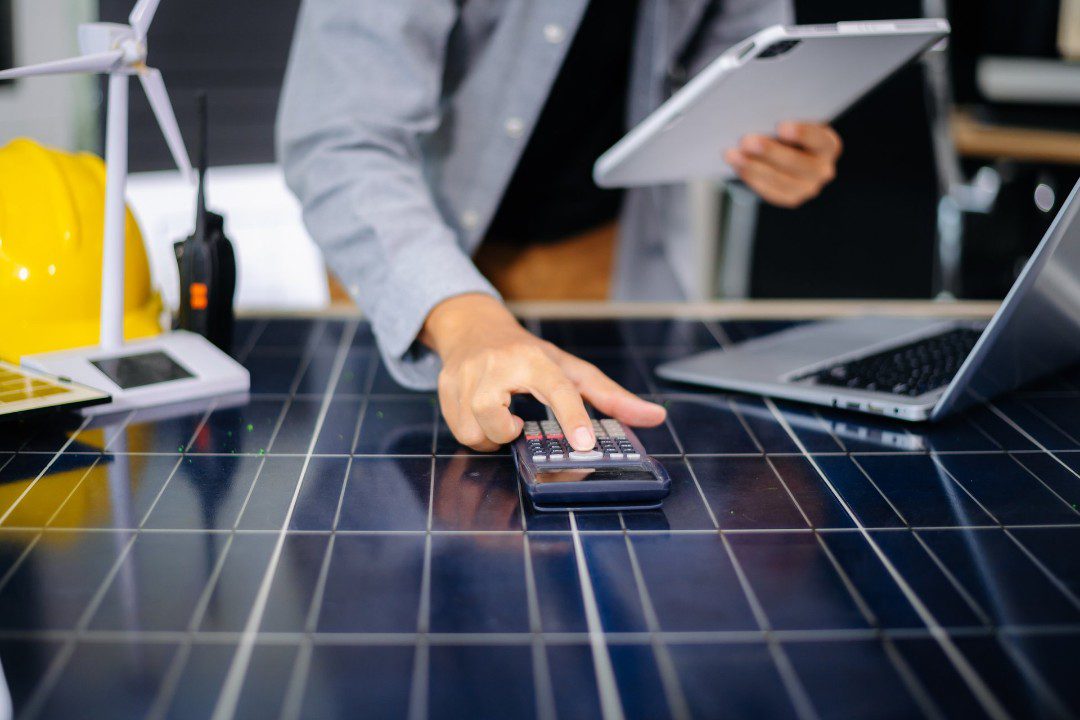
The case for solar in a commercial setting is built on several compounding advantages. Each benefit on its own is meaningful; together, they make commercial solar one of the most impactful investments a business can make.
Reduced Electricity Costs
The most immediate benefit businesses can realize from commercial solar is a significant reduction in electricity costs. By generating solar power on-site, your building draws less from the grid during operating hours. Depending on your system size relative to your energy usage, your monthly utility bill can drop dramatically. Over the warranty term of your solar panels, those cost savings compound into hundreds of thousands of dollars for larger commercial and industrial facilities.
For businesses with high energy demands, such as warehouses running climate control and lighting around the clock or retail spaces with extensive signage and refrigeration, the reduction in electricity costs can have a direct impact on profit margins.
Federal Investment Tax Credit
The federal investment tax credit is one of the most significant financial incentives available to businesses that invest in commercial solar today. The federal investment tax credit allows commercial solar buyers to deduct a substantial percentage of the solar installation cost from their federal taxes. This tax incentive applies to both the equipment and installation labor, meaningfully reducing the net cost of your solar investment.
Businesses that claim the federal investment tax credit for a solar PV system can also take advantage of accelerated depreciation through the Modified Accelerated Cost-Recovery System, known as MACRS. Accelerated depreciation lets you write down the value of your solar energy system faster than standard depreciation schedules, improving your near-term tax position. Consult a qualified tax professional for guidance specific to your situation, as tax incentives can change and individual circumstances vary.
Increased Property Value
Installing solar on a commercial building adds measurable value to the property itself. When you’re ready to sell or lease your building, a solar energy system that offsets electricity costs is an attractive feature for buyers and tenants. Commercial solar projects that are well-documented and professionally maintained transfer that value clearly to the next owner.
Sustainability and Brand Value
Sustainability is no longer just an internal goal for forward-thinking businesses. Many customers, employees, and partners prefer to work with companies that demonstrate a genuine commitment to reducing their environmental impact. A commercial solar installation is a visible, credible signal of that commitment.
The environmental benefits of solar extend beyond savings on your utility bill. Every solar system in operation prevents carbon emissions that would otherwise result from grid electricity generated by fossil fuels. Businesses that want to reduce their carbon footprint and communicate their values through action will find that solar energy services provide a strong foundation for those efforts.
Energy Independence
Energy independence is a growing priority for businesses that have experienced grid outages or rising utility rate volatility. A commercial solar system reduces your reliance on the grid for daytime operations, while adding battery storage to your commercial solar system takes that independence even further, allowing your building to store excess energy generation for use after sunset or during grid disruptions.
New Day Solar offers battery storage solutions that pair with commercial solar installations to give businesses greater control over their energy systems today and into the future.
Types of Commercial Solar Installations
Understanding the types of commercial solar available helps you match the right installation approach to your building and goals.
Rooftop Solar
Rooftop solar is by far the most common approach for commercial buildings. Flat commercial roofs are ideal for solar panel installation because they offer large areas of unobstructed roof space that can be oriented for maximum production. Industrial solar systems on warehouse rooftops, for example, can be very large because warehouse buildings typically have expansive flat roofs with minimal shading.
Rooftop Installation Considerations
Before committing to a commercial rooftop solar installation, a few key considerations apply. The structural integrity of the roof must support the added weight of solar panels, mounting hardware, and conduit. The age and condition of the roof matters as well; if a roof replacement is needed within the next several years, it’s worth coordinating that work before or alongside your solar installation to avoid removing and reinstalling panels later.
Roof orientation and any shading from neighboring structures or rooftop equipment like HVAC units will affect production. Your installer will evaluate these factors during the site assessment and design your solar PV system accordingly.
Ground-Mounted Systems
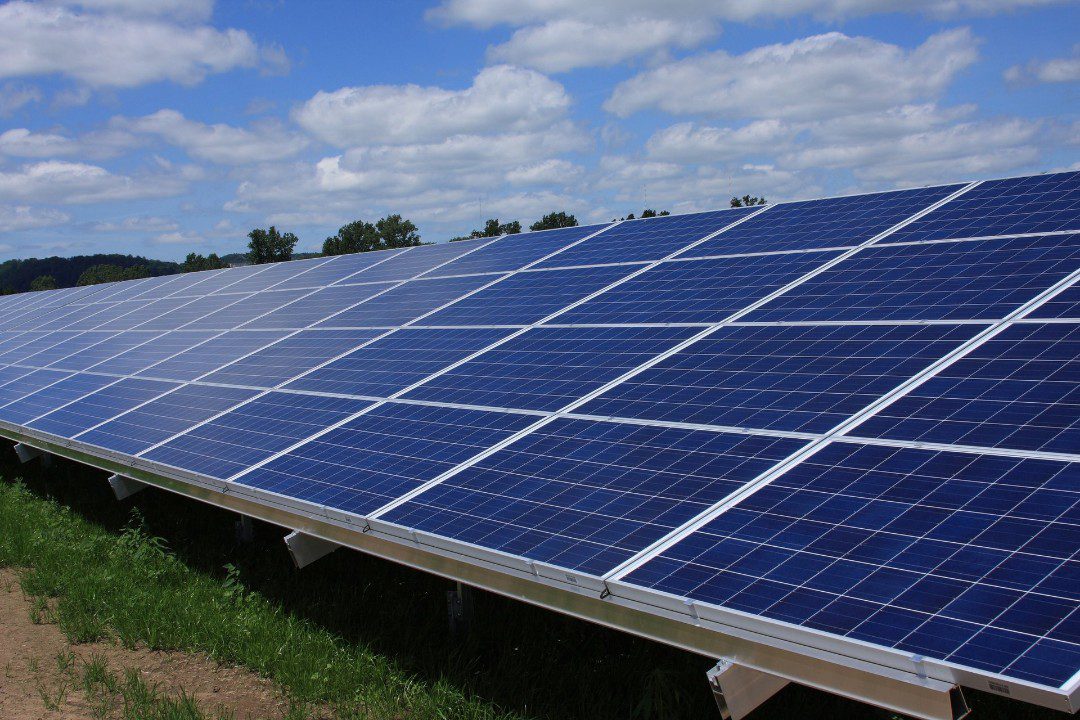
For commercial properties with available land, ground-mounted systems offer a flexible alternative to rooftop installation. Ground-mounted solar allows for optimal panel orientation regardless of building roof angle, and ground mounted solar systems can be easier to access for maintenance and cleaning over time.
Ground-mounted systems are common on agricultural properties, industrial campuses, and commercial properties with significant open land. They require more space than a rooftop installation but provide greater design flexibility for maximizing energy generation.
Solar Carports
Solar carports are an increasingly popular option for commercial properties with parking lots. Rather than leaving parking areas as unused asphalt, solar carports install solar panels on raised structures above parking spaces. This approach turns rooftop space that does not exist into productive solar infrastructure while also providing shade for vehicles below.
Solar carports are particularly well-suited for retail solar installations where large surface parking lots are common, and for office and commercial buildings where employees and customers appreciate covered parking. Solar carports can also support EV charging stations, making them a natural complement to fleet electrification goals.
Commercial Solar for Warehouses
Warehouse solar installation is one of the strongest applications of commercial solar in Southern California. Warehouses typically have large, flat rooftops with minimal obstructions, high and consistent energy demands from lighting, HVAC, and equipment, and operating hours that align well with solar production during daytime hours.
A commercial solar system on a warehouse can offset a significant share of total energy usage, and the roof space available often allows for systems large enough to fully cover daytime electricity needs. For distribution centers and manufacturing facilities with very high energy demands, pairing rooftop solar with battery storage can extend that coverage into evening hours as well.
Office Building Solar
Commercial solar is a great option for office buildings because office energy usage peaks during business hours, which is exactly when solar panels produce the most power. Lighting, computing, HVAC, and common area power all draw from the grid during the day. A well-sized solar installation can dramatically reduce what you draw from the grid during those peak hours.
Office buildings in Southern California also benefit from the region’s consistent sunshine and the visibility solar panels provide as a statement of sustainability to employees and visitors alike.
Retail Solar Benefits
Retail solar benefits are particularly strong for businesses with high daytime foot traffic and heavy electricity loads from lighting, refrigeration, signage, and point-of-sale systems. Retail locations that operate during peak solar production hours can see some of the best return on investment of any commercial property type.
For retail chains operating multiple locations, a portfolio approach to commercial solar can produce compounding cost savings across all sites. New Day Solar has the experience to handle commercial installations at scale and can work with multi-location businesses on a plan that fits their portfolio.

Financing Options for Commercial Solar
Understanding your financing options is a key consideration when planning a commercial solar investment. The right approach depends on your tax position, cash flow preferences, and long-term ownership plans.
Direct Purchase
Buying your commercial solar system outright delivers the greatest long-term financial return. You own the system, capture the full value of the federal investment tax credit, qualify for accelerated depreciation, and receive all the cost savings generated by your system over its full life. For businesses with the capital or access to favorable financing, direct purchase is often the best path.
Solar Loans
Solar loans let businesses finance their installation with little or no money down while still owning the system and accessing the federal investment tax credit. Monthly loan payments are often lower than the utility cost savings generated by the system, creating positive cash flow from day one. As interest on business loans may be deductible, a solar loan structured well can be highly cost-effective.
Power Purchase Agreements
Power purchase agreements, or PPAs, are a financing structure where a third-party investor installs and owns the solar system on your property and sells you the electricity it generates at a set rate below your current utility rate. Under a power purchase agreement, you don’t own the system, which means you don’t capture the federal investment tax credit directly. A party that installs and owns the solar system under a PPA structure is responsible for maintenance and performance over the agreement term.
PPAs can be a good fit for commercial building owners who want the cost savings of solar without the upfront investment or ownership responsibility. The tradeoff compared to ownership is that the long-term financial return is lower since the tax incentives flow to the system owner rather than the building owner.
Key Considerations for Commercial Solar Projects
Every commercial solar installation is different. These key considerations for commercial planning help you go into the process prepared.
Energy Audit
Before sizing your commercial solar system, evaluate your normal energy usage. An energy audit or review of your utility bills over the past 12 months gives your installer the data needed to design a system that matches your real consumption. Oversizing or undersizing a commercial solar system both carry financial consequences.
Permitting and Interconnection
Commercial solar projects require permits from local jurisdictions and an interconnection agreement with your utility before the system can connect to the grid. The permitting timeline for commercial installations can vary depending on municipality and system size. Working with an experienced solar installer who has managed commercial permitting in your area is a significant advantage. New Day Solar has been handling solar panel permits and utility interconnection since 1988. Review our article on what’s involved with solar panel permits for more details.
System Monitoring
Commercial solar energy systems should include monitoring capabilities that track real-time and historical production data. Monitoring lets you verify your system is performing as designed, catch underperformance early, and document production for tax and accounting purposes. An ongoing solar system maintenance plan that includes scheduled monitoring will help ensure the system is functioning at optimal levels.
Ongoing Maintenance
Commercial solar systems require periodic maintenance to sustain their performance. In Southern California, dust accumulation on solar panels can significantly reduce output. Professional solar panel cleaning and equipment inspections will keep your system producing at design levels and catch issues before they become costly repairs. New Day Solar’s maintenance plans cover both commercial and residential and commercial systems.
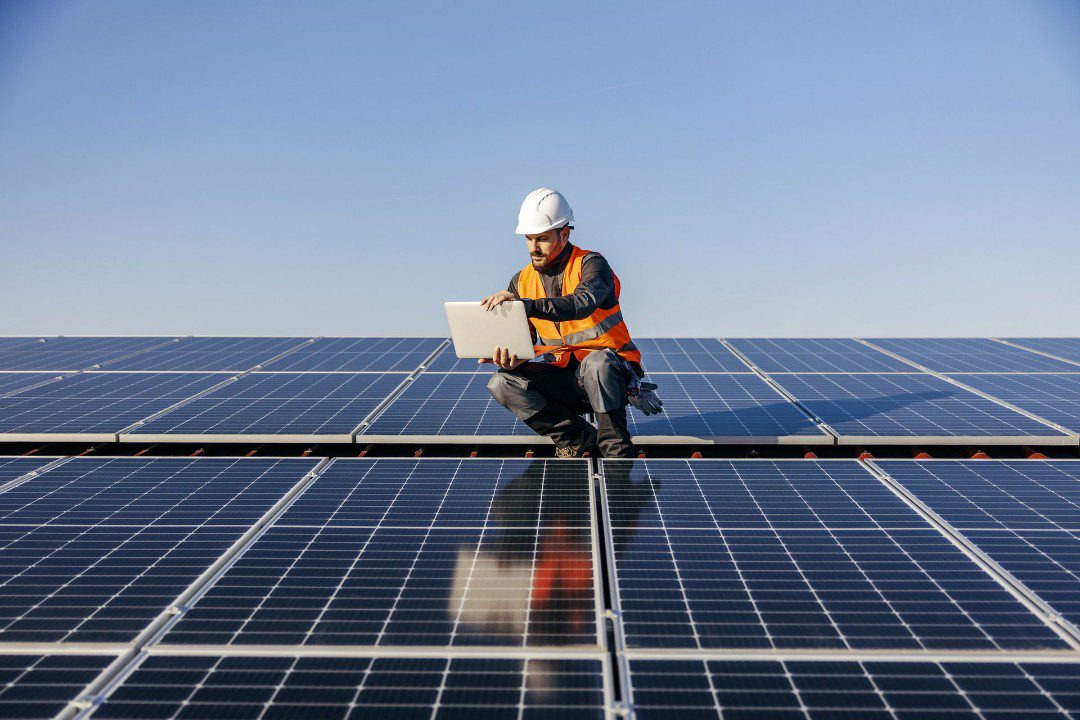
Everything You Need to Know About Commercial Solar Financing and Incentives
Getting the full picture on commercial solar incentives involves looking at federal, state, and utility-level programs together.
Federal Investment Tax Credit
As noted above, the federal investment tax credit is critical for commercial solar financial planning in the current market. The ITC has enabled many commercial solar projects to reach a positive ROI within a competitive timeframe. Given that tax incentive structures can change with legislation, it’s important to work with your tax advisor and solar installer to determine the best path forward.
Accelerated Depreciation
The MACRS accelerated depreciation benefit, which is available to commercial solar buyers, allows a significant portion of the system cost to be depreciated in the first year, with the remainder depreciated over a short schedule. This benefit effectively reduces the net cost of your commercial solar investment.
Utility Rebates and Local Programs
California utilities and local agencies offer rebates or incentive programs for commercial solar installations. Program availability changes over time, and your solar installer can help identify which programs apply to your property and installation timeline.
Why Choose New Day Solar for Your Commercial Installation
New Day Solar has been installing solar systems in Southern California since 1988. That depth of experience across residential and commercial projects means our team understands the specific demands of commercial and industrial buildings. We’ve navigated the permitting landscape across Inland Empire, San Diego, Los Angeles, Orange, and Ventura counties, and know how to design commercial solar systems that deliver on their financial projections.
As a trusted solar partner for commercial property owners in the region, New Day Solar approaches every commercial solar installation with the same commitment to quality workmanship that has earned us hundreds of five-star reviews. We’re not a high-pressure sales operation; we’re a family-owned company that has been helping businesses and homeowners invest in solar the right way for decades.
If you’re ready to explore commercial solar for your warehouse, office, retail space, or other commercial building, our team is here to walk you through the process, answer your questions, and design a system built for your specific energy needs.
Contact New Day Solar to schedule a commercial solar consultation and get started on the path to energy independence and long-term cost savings.
Posted by New Day Solar
2 months ago / May 17, 2026
At New Day Solar, we are committed to improving the world we live in, as well as helping our community create brighter tomorrows!
With the expertise that New Day Solar provides, as well as the federal tax credits and rebates available, solar electricity is beneficial to everyone. Not only will you help conserve our environment, but you can save some money too! Solar electricity is not just a luxury, but also an investment for your home and country. Electricity is only going to get more expensive, but with help from New Day Solar, you can harness the sun’s energy and use it to your advantage.
Filed Under: